The curtain has closed on one of pop music’s most electrifying voices. Nedra Talley Ross, a founding member of the legendary girl group The Ronettes, has died at the age of 80. Her passing marks the end of an era defined by bold vocals, gravity-defying hairdos, and the unmistakable Wall of Sound that reshaped popular music in the 1960s. As fans and historians reflect on her life and career, the imprint of her artistry remains undeniable.
Talley Ross wasn’t just a background presence—she was part of a sonic revolution. Alongside her cousin Veronica "Ronnie" Spector and Estelle Bennett, she co-created a sound that fused R&B, rock and roll, and teen romance into a potent, emotionally charged cocktail. The Ronettes didn’t just sing about love—they embodied its drama, danger, and yearning.
The Rise of The Ronettes: A New Kind of Girl Group
Before The Ronettes, the girl group landscape was crowded with polished harmonies and sugary melodies. The Ronettes changed the formula. Their look—beehive hair, heavy eyeliner, and tight skirts—was as striking as their sound. But it was their voice, depth, and attitude that broke new ground.
Formed in New York City in the early 1960s, the group started as a family act. Nedra Talley joined her cousin Ronnie Bennett and sister Estelle Bennett after winning a talent show. Their early performances at local clubs drew attention, but it wasn’t until they caught the ear of producer Phil Spector that their career skyrocketed.
Spector’s Wall of Sound technique—a dense, reverberant production style layered with percussion, strings, and echo—was the perfect backdrop for The Ronettes’ sultry, defiant energy. Talley Ross’s voice, though not the lead, provided essential texture. Her lower register grounded the harmonies, giving songs like “Be My Baby” and “(The Best Part of) Breakin’ Up” their emotional weight.
“She had the stability in the trio,” music historian Alan Betrock once noted. “Where Ronnie was the fire and Estelle the spark, Nedra was the foundation.”
Nedra Talley Ross: The Voice Behind the Legacy
While Ronnie Spector’s lead vocals often took center stage, Nedra Talley Ross’s role was foundational. She wasn’t just a harmony singer—she shaped the group’s identity. Her vocal precision and stage presence helped define The Ronettes’ signature blend of toughness and vulnerability.
Consider “Walking in the Rain,” a 1964 hit that showcased the group’s dramatic flair. The thunderclaps, the orchestral swell, the yearning repetition of the chorus—Talley Ross’s voice locked into the rhythm, reinforcing the emotional current beneath Ronnie’s lead. It’s a masterclass in ensemble singing, where every note matters.
Beyond vocals, she brought maturity and discipline to the group. While internal tensions and Spector’s controlling nature created strain—especially for Ronnie—Talley Ross maintained a steadier course. She later recalled the pressures of sudden fame, the grueling tour schedules, and the surreal experience of recording under Spector’s exacting standards.
“We’d do 30 takes of the same line,” she said in a 2016 interview. “He was a perfectionist, but he also knew how to capture a feeling—something raw and real.”
Life After The Ronettes: Faith, Family, and Quiet Influence
The Ronettes disbanded in the late 1960s, and Talley Ross stepped away from the spotlight. Unlike some of her peers who chased comebacks or struggled with fame, she made a deliberate choice to prioritize family and faith.

In the 1970s, she married and became deeply involved in Christian ministry. She distanced herself from the music industry for decades, focusing on raising her children and serving in her church. Yet she never fully left music behind.
She occasionally reunited with Ronnie for performances, including a memorable 2007 Rock and Roll Hall of Fame induction. The event was bittersweet—Estelle had passed in 2009, and Ronnie’s health was declining—but Talley Ross’s presence reaffirmed the bond that had defined their youth.
“I wasn’t looking for fame,” she said in a rare public appearance. “I was grateful for the music, but I found my purpose elsewhere.”
Her later years included limited public appearances and interviews, but she remained engaged with fans. In 2020, she released a spoken-word recording reflecting on her life and faith, offering a serene contrast to the high-energy performances of her youth.
The Ronettes’ Cultural Impact: More Than Just Hits
The Ronettes didn’t just have hits—they influenced generations. Their music became a blueprint for artists across genres. Bruce Springsteen cited “Be My Baby” as one of the greatest records ever made. Brian Wilson of The Beach Boys called it his inspiration for “God Only Knows.” The song’s opening drumbeat is one of the most iconic in pop history.
But their influence extended beyond sound. The Ronettes redefined what girl groups could be. They were glamorous but tough. Romantic but independent. Their songs weren’t passive daydreams—they were declarations of desire, often on their own terms.
Nedra Talley Ross was central to that image. Her style, her poise, her voice—all contributed to a package that felt both aspirational and authentic. Even as trends shifted, The Ronettes’ legacy endured. Their music has appeared in films like Dirty Dancing, Goodfellas, and Mean Girls, introducing their work to new audiences.
The Challenges Behind the Glamour
The glamor of fame often masks deeper struggles. For The Ronettes, the cost was high. Phil Spector’s control over their careers—and, in Ronnie’s case, her personal life—cast a long shadow. The group saw minimal royalties for decades, despite the massive success of their records.
Talley Ross has spoken candidly about the financial exploitation they faced. “We were kids,” she said. “We didn’t understand contracts. We didn’t know we weren’t getting paid what we should.”
It wasn’t until the 1980s and 1990s that artists like The Ronettes began to reclaim rights to their work. Talley Ross supported efforts to secure proper compensation, though she remained more private than Ronnie in public advocacy.
The industry’s treatment of female artists in the 1960s—particularly women of color—was often dismissive or exploitative. The Ronettes, biracial and proud of their heritage, navigated these dynamics with resilience. Talley Ross, in later reflections, emphasized the importance of identity and self-respect.
“We knew who we were,” she said. “Even when the world tried to box us in.”
Remembering Nedra Talley Ross: A Quiet Force
In a cultural moment that often prizes visibility and self-promotion, Nedra Talley Ross stood apart. She achieved iconic status, then chose to step away. She didn’t seek the spotlight in her later years, but her absence didn’t diminish her impact.
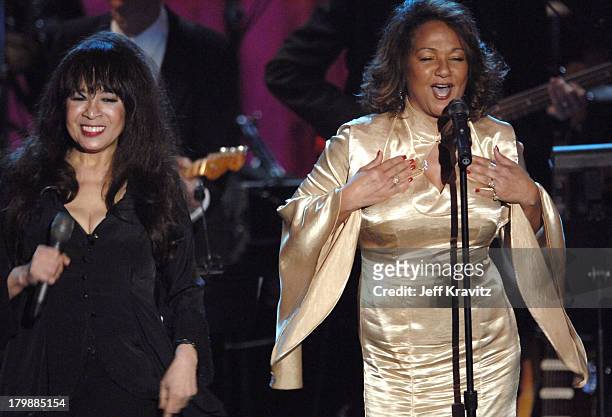
Her legacy lives in every girl group that followed—the way they harmonize, the way they command the stage, the way they sing about love with both vulnerability and strength. It lives in the producers who still study Spector’s recordings, in the fans who play “Be My Baby” on repeat, in the covers by artists from The Crystals to Kate Pierson.
More than that, it lives in the quiet dignity with which she lived her life after fame. She didn’t need constant validation. She had sung her truth, done her part, and moved forward with purpose.
The Ronettes’ Discography: A Compact but Lasting Catalog
Though their output was limited—just one studio album, Presenting the Ronettes (1964), and a handful of singles—their work remains essential listening. Key tracks include:
- “Be My Baby” (1963) – The definitive Wall of Sound single, often listed among the greatest songs of all time.
- “Baby, I Love You” (1963) – A cover with lush instrumentation and passionate delivery.
- “(The Best Part of) Breakin’ Up” (1964) – A dramatic breakup anthem with driving rhythm.
- “Walking in the Rain” (1964) – An atmospheric ballad enhanced by orchestral production.
- “I Can Hear Music” (1966) – A shift toward a more polished, Motown-influenced sound.
Each track highlights the trio’s chemistry, with Talley Ross’s harmonies anchoring the emotional core.
A Legacy That Endures
Nedra Talley Ross’s death at 80 closes a chapter, but the story of The Ronettes continues. Their music remains a touchstone for authenticity in pop. Their image endures as a symbol of 1960s cool. And their voice—literally and figuratively—challenges the notion that background singers are secondary.
Talley Ross was never flashy, never self-aggrandizing. But her contribution was immense. She helped build a sound that moved a generation and influenced countless artists. She lived a life guided by faith, family, and artistic integrity.
For anyone discovering The Ronettes for the first time, or revisiting their music in light of her passing, the lesson is clear: greatness isn’t always the loudest. Sometimes, it’s the voice you don’t immediately notice—the one that holds everything together.
Honor her memory by listening closely. Turn up “Be My Baby.” Pay attention to the harmonies. Hear the strength in the silence between the beats. That’s where Nedra Talley Ross lives on.
FAQ
Was Nedra Talley Ross the lead singer of The Ronettes? No, Ronnie Spector was the lead singer. Nedra Talley Ross provided harmony and backing vocals, contributing to the group’s rich, layered sound.
How did The Ronettes get discovered? They were discovered after performing at the Peppermint Lounge in New York City, where they caught the attention of producer Phil Spector.
Did Nedra Talley Ross continue making music after The Ronettes? She largely stepped away from the music industry after the group disbanded, focusing on family and faith, though she participated in occasional reunions and interviews.
What was Nedra Talley Ross’s relationship to Ronnie Spector? Nedra was Ronnie Spector’s cousin. They grew up together and formed The Ronettes with Estelle Bennett, Ronnie’s sister.
Why is “Be My Baby” so important in music history? The song is considered a masterpiece of the Wall of Sound production technique and has been cited as a major influence by artists like Brian Wilson and Bruce Springsteen.
Did The Ronettes receive proper royalties for their music? Initially, no. Like many artists of their era, they were underpaid and lacked control over their recordings. Later efforts helped secure better recognition and compensation.
What is Nedra Talley Ross remembered for? She is remembered as a key member of The Ronettes, a pioneer of the girl group sound, and a woman who lived with grace and conviction beyond her years in the spotlight.
FAQ
What should you look for in Ronettes Singer Nedra Talley Ross Dead at 80? Focus on relevance, practical value, and how well the solution matches real user intent.
Is Ronettes Singer Nedra Talley Ross Dead at 80 suitable for beginners? That depends on the workflow, but a clear step-by-step approach usually makes it easier to start.
How do you compare options around Ronettes Singer Nedra Talley Ross Dead at 80? Compare features, trust signals, limitations, pricing, and ease of implementation.
What mistakes should you avoid? Avoid generic choices, weak validation, and decisions based only on marketing claims.
What is the next best step? Shortlist the most relevant options, validate them quickly, and refine from real-world results.