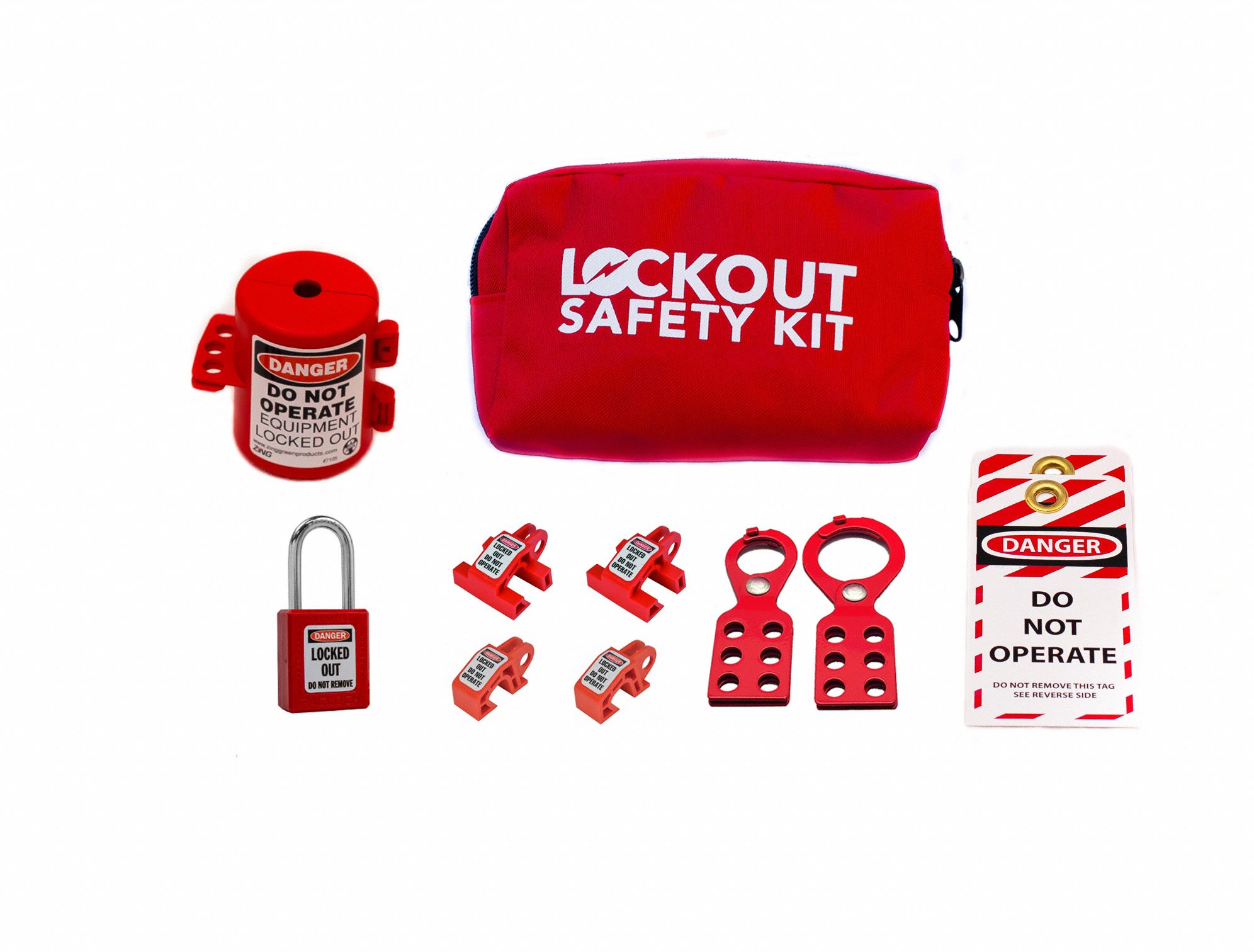
In high-risk industrial environments, a single misstep during maintenance can lead to catastrophic injury or even death. That’s why Lockout Tagout (LOTO) isn’t just a procedure—it’s a lifeline. At the heart of every effective LOTO program are reliable lockout devices, and Grainger has emerged as a go-to supplier for safety professionals across North America. From heavy-duty padlocks to specialized valve and circuit breaker locks, Grainger offers a comprehensive selection of lockout tagout locks that meet OSHA standards and real-world demands.
But not all locks are created equal. Choosing the wrong type, material, or mechanism can undermine an entire safety protocol. This guide breaks down what you need to know about lockout tagout locks available through Grainger, how to select the right ones for your operation, and where common mistakes occur—so you can build a system that protects workers, passes audits, and functions smoothly day after day.
Why Lockout Tagout Locks Matter in Industrial Safety
Lockout tagout locks serve one critical function: they physically prevent the accidental release of hazardous energy during servicing or maintenance. According to OSHA, failure to control hazardous energy accounts for nearly 10% of serious accidents in manufacturing. A properly applied lock ensures that machinery stays de-energized until maintenance is complete and the authorized employee removes their personal lock.
Grainger’s inventory supports this mission with locks engineered for durability, visibility, and ease of use. These aren’t just generic padlocks—they’re purpose-built devices designed to integrate into broader LOTO programs. Whether it's a steel-bodied hasp lock, a nylon valve lock, or a circuit breaker cover, each product is selected to resist tampering, environmental stress, and misuse.
Example: A maintenance technician working on a conveyor system locks out the motor disconnect using a Grainger red safety padlock. That lock is the last line of defense between a safe repair and a potentially fatal startup.
Without reliable locks, even the best LOTO procedures collapse under pressure.
Key Features of Grainger Lockout Tagout Locks
When sourcing locks from Grainger, look for these non-negotiable features:
1. OSHA Compliance Every lock must support compliance with 29 CFR 1910.147. Grainger clearly labels products that meet these federal standards, including unique identification capabilities and non-releasable shackles.
2. Shackle Material & Size - Stainless steel: Resists corrosion in wet or outdoor environments - Nylon-coated steel: Reduces spark risk in flammable atmospheres - Shackle diameter matters—larger diameters (e.g., 9/32" or 3/8") fit more hasps and brackets
3. Lock Body Design - Tamper-resistant cores - Weather-resistant casings - Bright colors (red is standard) for instant recognition

4. Keyed Alike, Keyed Different, or Key Control Options - Keyed alike: Multiple locks operated by the same key—ideal for team lockout - Keyed different: Each lock has a unique key—enhances individual accountability - Key-retaining: The key stays in the lock until it's closed and locked—prevents accidental leaving of keys
5. Custom Engraving & Identification Many Grainger locks allow employee name, ID, or department engraving—critical for maintaining control and audit trails.
These features aren't optional extras—they're fundamental to building a defensible safety program.
Top 5 Lockout Tagout Locks Available at Grainger
Below are five widely used and highly effective lockout locks available through Grainger, selected based on durability, application range, and user feedback:
| Product | Type | Key Features | Best For |
|---|---|---|---|
| Grainger 5XAK1 | Safety Padlock – Steel | 2" shackle, keyed different, red polypropylene body | General-purpose lockout, indoor use |
| Grainger 5XAK9 | Safety Padlock – Stainless Steel | 1-1/2" shackle, corrosion-resistant, key-retaining | Outdoor, food processing, chemical plants |
| Grainger 5XAG1 | Cable Lockout Device | Adjustable 7" stainless steel cable, fits irregular shapes | Valves, levers, pneumatic lines |
| Grainger 5XAV1 | Breaker Lockout (Snap-In) | Nylon construction, fits 1–3 poles, red color | Electrical panels, circuit breakers |
| Grainger 5XAJ9 | Group Lockout Hasp | Accepts up to 6 locks, 9/32" shackle | Multi-person maintenance operations |
Each of these serves a distinct role. For example, the 5XAG1 cable lockout is essential when standard padlocks can’t secure oddly shaped energy-isolation points. Meanwhile, the 5XAV1 ensures breakers can’t be toggled—even if someone tries to bypass a tag.
Tip: Always carry a mix of lock types. A single technician might need a padlock, cable lock, and breaker sleeve during one maintenance cycle.
How to Choose the Right Lock for Your Application
Selecting the wrong lock can create a false sense of security. Match the device to the hazard.
Electrical Systems Use insulated or non-conductive locks like nylon breaker lockouts. Grainger’s 5XAV1 and 5XAW1 models are specifically designed for circuit breakers and isolators.
Pneumatic & Hydraulic Lines Valve locks with adjustable bands or cable restraints prevent valve actuation. Grainger offers quarter-turn and linear valve locks in various sizes.
Rotating Machinery Use hasps and physical barriers. A group lockout hasp (like 5XAJ9) allows multiple technicians to apply personal locks before work begins.
Harsh Environments In washdown zones or chemical areas, stainless steel or polymer locks resist corrosion. The 5XAK9 padlock is a top pick here.
Common mistake: Using office-grade padlocks instead of purpose-built safety locks. These often lack key-retaining mechanisms or tamper-proof design—making them non-compliant with OSHA.
Always verify compatibility. A lock might be OSHA-compliant on paper but fail in the field if it doesn't fit your disconnects or valves.
Integrating Grainger Locks into Your LOTO Program
A lock is only as effective as the system it operates within. Grainger doesn’t just sell locks—they support full program implementation.
Step 1: Audit Energy Sources Identify all points requiring lockout (electrical, mechanical, hydraulic, etc.). Grainger’s LOTO catalog groups products by energy type, making it easier to source the right device.
Step 2: Standardize Lock Types Use consistent colors and labeling. Grainger offers red as standard, but blue or green locks can designate contractor or external team use.
Step 3: Train Employees on Lock Application Ensure workers know how to properly install, label, and remove locks. Grainger provides training resources and printable tag templates.
Step 4: Maintain Inventory Keep spare locks, tags, and replacement keys on hand. Grainger’s fast shipping and local branches help maintain uptime.
Step 5: Audit and Update Regularly During safety audits, check for worn shackles, missing tags, or unauthorized lock removal. Grainger’s product numbering makes tracking easy.
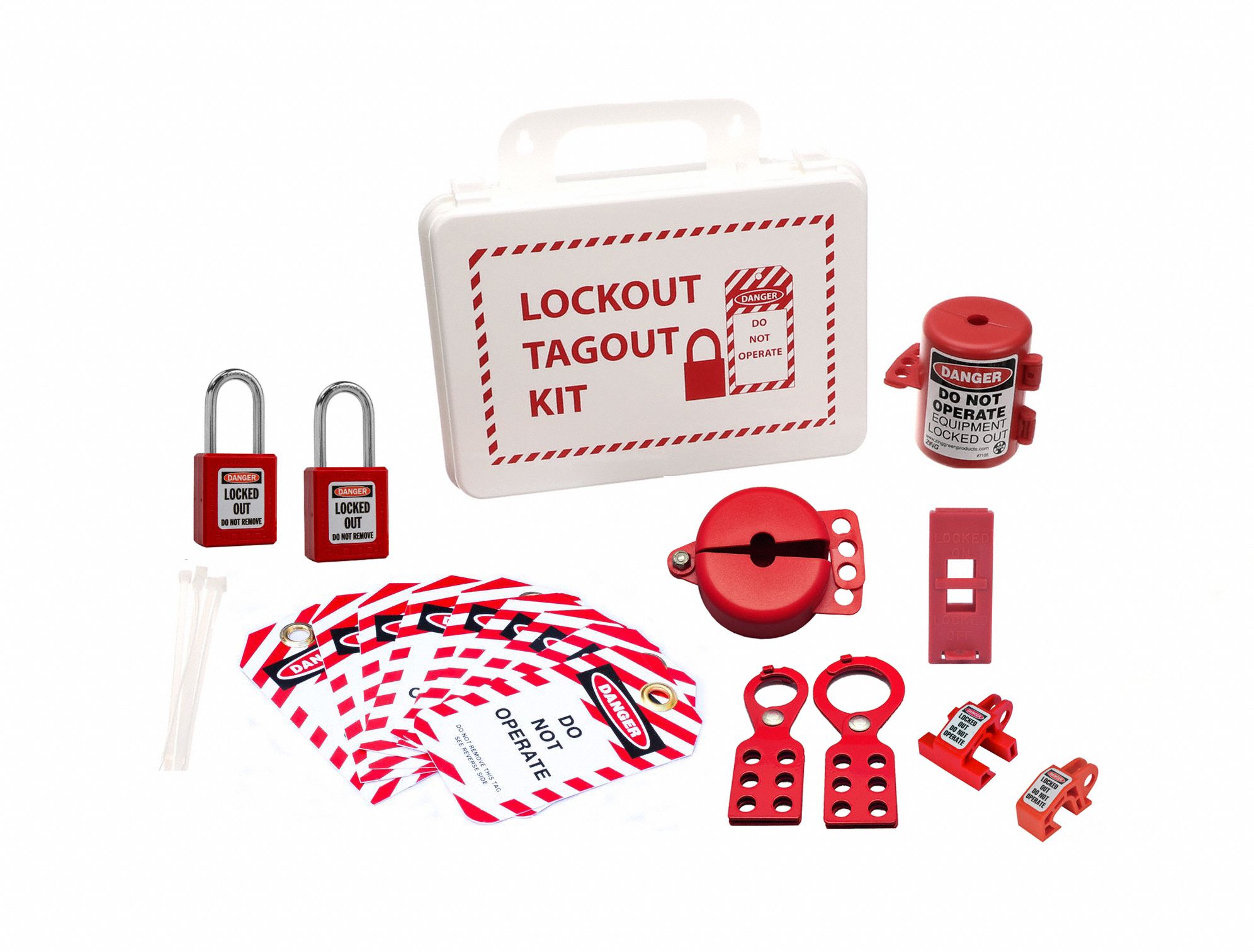
Tip: Use lockout stations from Grainger to centralize equipment. A single wall-mounted kit can hold locks, tags, hasps, and instructions—reducing search time and improving compliance.
Common Missteps and How to Avoid Them
Even experienced teams make errors. These are the most frequent LOTO lock failures—and how to fix them:
1. Sharing Locks or Keys OSHA requires each employee to use their own lock. Grainger’s keyed-different sets prevent cross-use.
2. Using Damaged or Worn Locks Inspect shackles for bending, corrosion, or deformation. Grainger sells replacement locks in bulk for easy rotation.
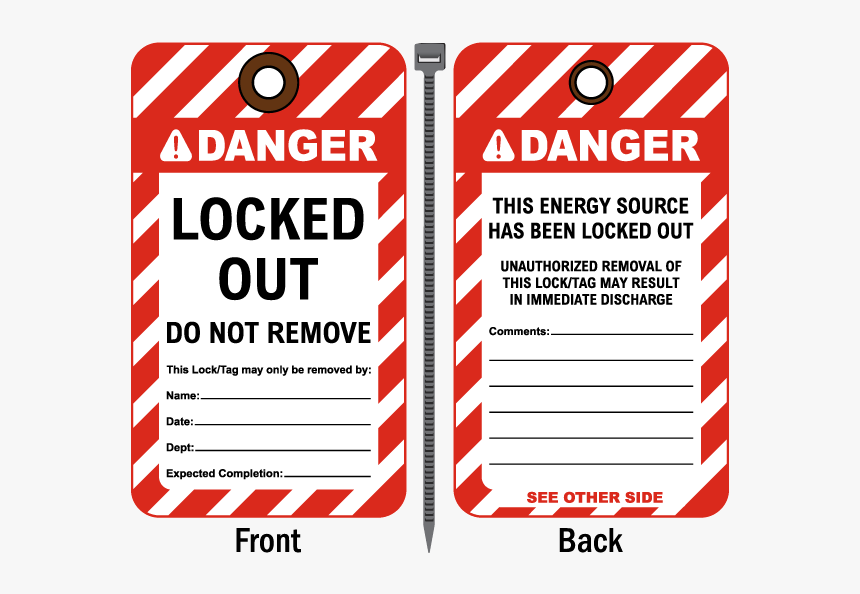
3. Skipping the Tag A lock without a tag is incomplete. Tags must include the worker’s name, date, and reason for lockout. Grainger sells pre-printed and blank tags.
4. Poor Fit on Isolation Points A lock that doesn’t fully engage a disconnect is a hazard. Test fit before deployment.
5. Storing Locks in Inaccessible Locations Locks should be available at or near machinery. Grainger’s portable lockout kits solve this.
Fix these issues early. A single incident can cost far more than a full locker of safety gear.
Why Grainger Stands Out for LOTO Supplies
While many suppliers offer safety locks, Grainger delivers consistency, availability, and trust.
- Nationwide Distribution: Over 450 branches ensure next-day delivery in most regions
- Curated Selection: Only products meeting industry standards are carried
- Technical Support: Product specialists help match locks to applications
- Bulk & Custom Options: Engraved locks, multi-packs, and station kits streamline purchasing
For mid-sized manufacturers and facility managers, Grainger balances price, reliability, and support better than most online-only retailers.
Unlike general marketplaces, Grainger vets its industrial safety inventory—so you’re not guessing whether a $5 Amazon lock meets OSHA specs.
Build a Reliable System—Start
with the Right Lock
Lockout tagout locks from Grainger aren’t just hardware—they’re accountability tools. When every technician applies their own red padlock, labeled and secured properly, you create a culture where safety is visible, personal, and non-negotiable.
Don’t wait for an audit or near-miss to upgrade your LOTO gear. Visit Grainger’s lockout tagout section, audit your current inventory, and replace generic or damaged locks with purpose-built, compliant devices. Your team’s safety depends on it.
Frequently Asked Questions
What types of lockout locks does Grainger carry? Grainger offers safety padlocks, cable locks, valve locks, breaker lockouts, group hasps, and specialty devices for unique isolation points.
Are Grainger lockout locks OSHA compliant? Yes, Grainger clearly marks products that meet OSHA 29 CFR 1910.147 requirements, including key-retaining mechanisms and non-releasable shackles.
Can I get Grainger locks with custom engraving? Yes, many padlocks can be engraved with employee names, IDs, or departments for accountability and control.
Do Grainger lockout locks come in different materials? Yes—options include steel, stainless steel, nylon, and polymer, depending on environmental and safety needs.
How do I know which lock size to choose? Match the shackle or cable length to your isolation point. Measure the gap or diameter before selecting—Grainger provides dimensions for every product.
Can I buy lockout kits instead of individual locks? Yes, Grainger sells pre-assembled lockout kits for electrical, mechanical, and multi-energy systems.
Is same-day pickup available for lockout locks? Yes, at most Grainger branch locations, allowing immediate restocking after audits or incidents.
FAQ
What should you look for in Lockout Tagout Locks at Grainger: Safety Solutions That Work? Focus on relevance, practical value, and how well the solution matches real user intent.
Is Lockout Tagout Locks at Grainger: Safety Solutions That Work suitable for beginners? That depends on the workflow, but a clear step-by-step approach usually makes it easier to start.
How do you compare options around Lockout Tagout Locks at Grainger: Safety Solutions That Work? Compare features, trust signals, limitations, pricing, and ease of implementation.
What mistakes should you avoid? Avoid generic choices, weak validation, and decisions based only on marketing claims.
What is the next best step? Shortlist the most relevant options, validate them quickly, and refine from real-world results.